
Understanding Mortgage Options & Rates
Explore mortgage options in NZ South Auckland: types, rates, tips for getting the best deal, and how brokers can help you achieve homeownership. Your guide to financial literacy.

mangerebudgeting.org.nz
What You Will Learn
Explore mortgage options in NZ South Auckland: types, rates, tips for getting the best deal, and how brokers can help you achieve homeownership. Your guide to financial literacy.
Navigating the world of home loans can feel overwhelming, especially with the diverse mortgage options in NZ South Auckland. Whether you’re a first-time homebuyer, looking to refinance, or keen to understand the best rates available, having clear, expert guidance is crucial. In South Auckland, a vibrant and growing community, understanding your mortgage choices is key to securing your financial future and stepping onto the property ladder. This comprehensive guide will demystify mortgages, break down various options, and equip you with the knowledge to make informed decisions for your homeownership journey.
Table of Contents
- Different Types of Mortgages Explained
- How Mortgage Rates Are Set in NZ
- Tips for Getting the Best Mortgage Deal
- Working with a Mortgage Broker in South Auckland
- Refinancing and Managing Existing Mortgages
- Frequently Asked Questions
- References & Sources
Different Types of Mortgages Explained
When exploring mortgage options in NZ South Auckland, you’ll encounter several types, each with unique features and benefits. Choosing the right one depends heavily on your financial situation, risk tolerance, and future plans. Let’s delve into the most common types available.
Fixed-Rate Mortgages
A fixed-rate mortgage means your interest rate is locked in for a set period, typically from six months to five years. This offers predictability, as your repayments remain the same regardless of market fluctuations. It’s excellent for budgeting stability, but you won’t benefit if rates drop during your fixed term.
Floating-Rate Mortgages
With a floating-rate mortgage, your interest rate can change at any time, moving up or down with the Official Cash Rate (OCR) set by the Reserve Bank of New Zealand and other market forces. This offers flexibility to make extra repayments without penalty and potential savings if rates fall. However, your repayments could increase if rates rise.
Revolving Credit Mortgages
This type of mortgage operates much like a large overdraft. Your salary is paid directly into the account, reducing your outstanding balance daily and thus the interest you pay. You can redraw funds up to your approved limit. It requires strict financial discipline but can significantly reduce the overall interest paid and loan term.
Offset Mortgages
An offset mortgage links your savings and/or transactional accounts to your mortgage. The balances in these linked accounts reduce the principal amount your interest is calculated on. For example, if you have a $500,000 mortgage and $50,000 in your offset accounts, you only pay interest on $450,000. This is another effective way to save on interest without losing access to your savings.
Low-Equity Loans (LEL)
For those with a deposit less than 20% (LVR over 80%), LELs might be an option. However, they typically come with a Low Equity Premium (LEP) or Low Equity Margin (LEM) charged by the bank, which is an additional fee to offset the higher risk. This is common for first-home buyers in areas like South Auckland.
Here’s a quick comparison of key mortgage types:
| Mortgage Type | Key Feature | Pros | Cons |
|---|---|---|---|
| Fixed-Rate | Interest rate locked for a period | Budget certainty | Miss out if rates fall |
| Floating-Rate | Rate changes with market | Flexibility, potential savings | Rates can rise, unpredictable |
| Revolving Credit | Operates like an overdraft | Significant interest savings | Requires discipline, higher rate |
| Offset | Links savings to mortgage | Saves interest without losing access to cash | Requires substantial savings |
How Mortgage Rates Are Set in NZ
Understanding how mortgage rates are determined is vital when evaluating your mortgage options in NZ South Auckland. Several factors influence the rates offered by lenders:
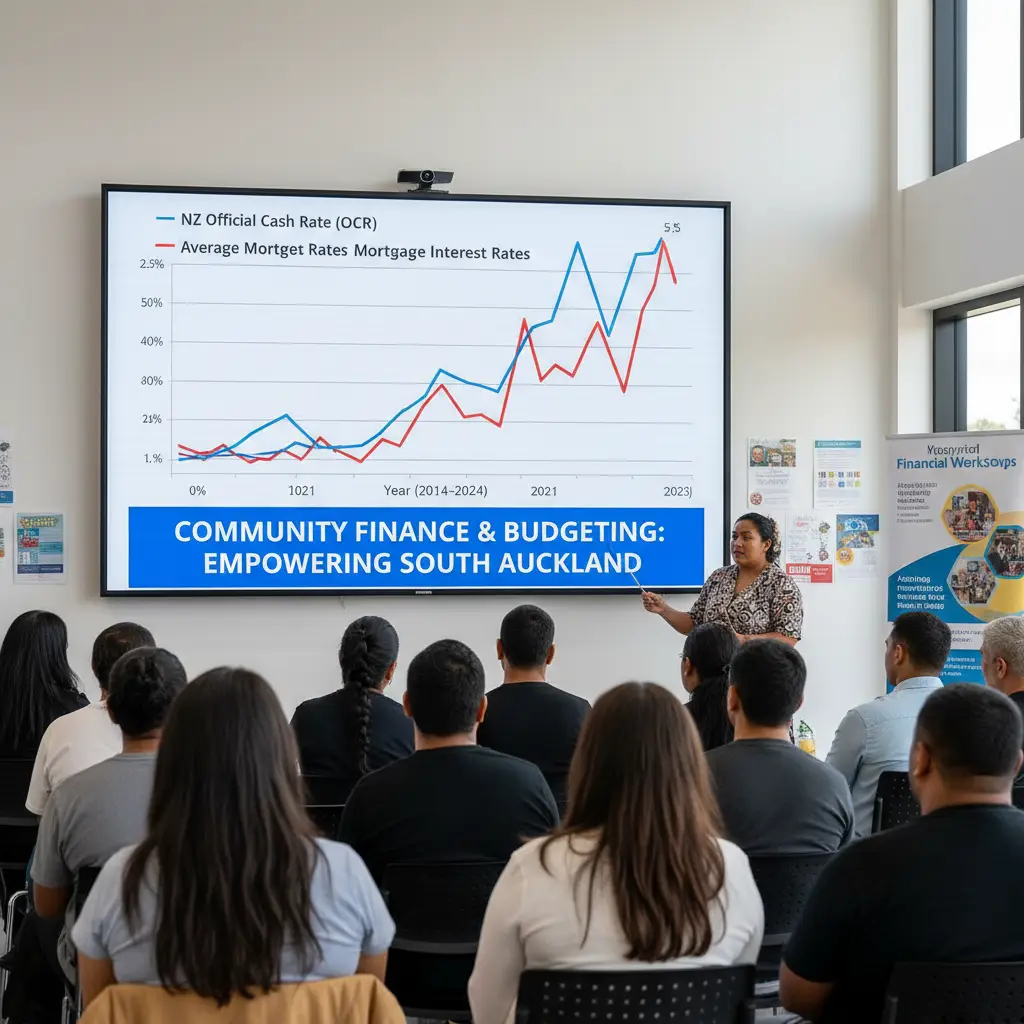
- Official Cash Rate (OCR): Set by the Reserve Bank of New Zealand (RBNZ), the OCR is the primary lever for monetary policy. When the OCR rises, commercial banks’ borrowing costs increase, which typically leads to higher mortgage rates.
- Wholesale Funding Costs: Banks borrow money from wholesale markets to fund their lending. Changes in global and domestic wholesale interest rates directly impact the rates they offer to customers.
- Competition: The competitive landscape among New Zealand’s banks and lenders plays a significant role. Fierce competition can drive rates down as institutions vie for market share.
- Credit Risk: Your individual financial profile, including your credit history, income stability, and loan-to-value ratio (LVR), affects the risk assessment by lenders, which can influence your specific rate.
- Economic Outlook: Broader economic conditions, inflation expectations, and employment figures all contribute to the RBNZ’s OCR decisions and, consequently, the overall interest rate environment.
Stat Callout: As of recent trends, the average two-year fixed mortgage rate in New Zealand has fluctuated significantly, often moving in lockstep with the RBNZ’s OCR adjustments. In late 2023 and early 2024, rates remained elevated as the RBNZ aimed to curb inflation, impacting affordability across regions, including South Auckland.
Tips for Getting the Best Mortgage Deal
Securing a competitive mortgage requires strategic planning and due diligence. Here’s a step-by-step approach to help you find the best mortgage options in NZ South Auckland:
1. Know Your Financial Position
Before approaching lenders, get a clear picture of your finances. This includes understanding your income, expenses, existing debts, and savings. Lenders will assess your serviceability – your ability to meet repayments. The stronger your financial position, the more attractive you appear to lenders, potentially opening up better rates.
2. Research and Compare Lenders
Don’t just go with your existing bank. Different banks and non-bank lenders offer varying rates, fees, and lending criteria. Use online comparison tools, check lenders’ websites, and pay close attention to the small print, including any associated fees like application fees or early repayment charges.
3. Negotiate Effectively
Once you have pre-approval or an offer from one lender, you can use it to negotiate with another. Banks are often willing to match or even beat competitor offers, especially for desirable clients. Don’t be afraid to ask for a better deal or additional incentives.
4. Consider a Mortgage Broker
Mortgage brokers work for you, not the banks. They have access to multiple lenders and can often secure deals you might not find on your own. They understand the nuances of various products and can guide you through the application process, saving you time and stress, particularly beneficial for those navigating the South Auckland property market.

Working with a Mortgage Broker in South Auckland
For many in the South Auckland community, engaging a mortgage broker is a strategic move. Brokers offer impartial advice and can simplify the complex process of finding the best mortgage options in NZ South Auckland. Here’s what to expect:
- Expert Guidance: Brokers possess deep market knowledge, understanding which lenders are best suited for different financial situations, including those with unique circumstances like self-employment or specific property types.
- Access to Multiple Lenders: They work with a panel of banks and non-bank lenders, providing you with a broader range of products and potentially more competitive rates than you’d find by approaching individual banks yourself.
- Saving Time and Stress: A broker handles all the paperwork, communicates with lenders on your behalf, and manages the application process from start to finish. This is invaluable, especially when time is limited.
- Negotiation Power: Due to their volume of business, brokers often have more leverage with lenders to negotiate better rates or terms than an individual might achieve.
- No Direct Cost to You: In most cases, mortgage brokers in New Zealand are paid by the lenders once a mortgage is settled, meaning their services are free to the borrower. Always confirm this upfront.
Refinancing and Managing Existing Mortgages
Even after securing your initial home loan, proactive management is key. Refinancing can be a powerful tool to improve your financial position, especially as your circumstances or market conditions change. Here’s how to approach it:
1. Assess Your Current Mortgage
Regularly review your existing mortgage terms, interest rate, and remaining balance. Understand any break fees if you’re on a fixed rate and consider if your current product still aligns with your financial goals.
2. Review Market Conditions
Keep an eye on current interest rates and economic forecasts. If rates have dropped significantly since you took out your loan, or if you anticipate they will in the near future, refinancing could save you money.
3. Seek Professional Advice
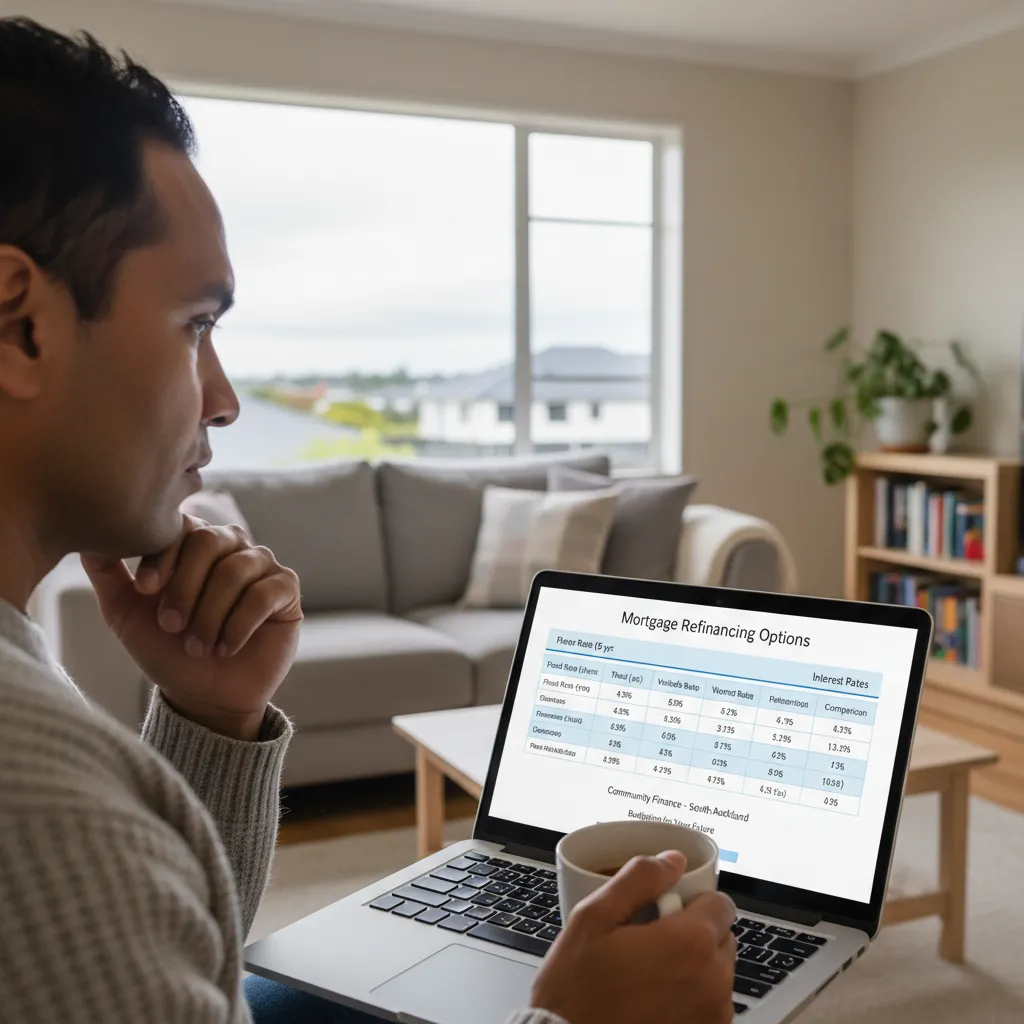
A mortgage broker can evaluate whether refinancing makes sense for your specific situation. They can compare your current deal against new mortgage options in NZ South Auckland and beyond, calculating potential savings versus any break costs.
4. Understand Costs Involved
Refinancing isn’t always free. There might be break fees (for fixed rates), new setup fees, valuation fees, or legal costs. Ensure any potential savings outweigh these expenses before making a switch.
Managing Your Mortgage Proactively: Beyond refinancing, consider making extra repayments whenever possible, even small amounts. Utilise tools like revolving credit or offset accounts effectively. Regularly review your repayment frequency – often, fortnightly payments can shave years off your loan and save significant interest.
Understanding the diverse mortgage options in NZ South Auckland is your first step towards confident homeownership. By arming yourself with knowledge, leveraging expert advice, and proactively managing your loan, you can unlock better financial outcomes for yourself and your family in this dynamic property market.
Frequently Asked Questions about Mortgages
Q: What is a good deposit size for a mortgage in South Auckland?
A: Ideally, a 20% deposit helps you avoid Low Equity Premiums (LEPs) and often gives you access to better interest rates. However, many first-home buyers in South Auckland qualify with lower deposits (e.g., 10-15%) through specific schemes or by paying an LEP.
Q: How long does it take to get a mortgage approved in NZ?
A: The pre-approval process can take anywhere from a few days to a couple of weeks, depending on your financial complexity and the lender’s workload. Full approval after finding a property can also vary, typically 1-3 weeks.
Q: Can I get a mortgage if I’m self-employed in South Auckland?
A: Yes, but lenders often require at least two years of consistent financial records (e.g., tax returns, financial statements) to assess income stability. Working with a broker is particularly beneficial for self-employed individuals to navigate specific lending criteria.
Q: What is the difference between principal and interest repayments?
A: Principal is the actual amount you borrowed. Interest is the cost of borrowing that money. Each mortgage repayment consists of both principal and interest. Early in the loan term, a larger portion typically goes to interest, while later, more goes to principal.
Q: Should I fix or float my mortgage rate?
A: This depends on your risk tolerance and financial goals. Fixed rates offer certainty for budgeting. Floating rates offer flexibility for extra repayments and can save money if rates fall. Many choose a ‘split’ loan, fixing part and floating part, to get the best of both worlds.
References & Sources
- Reserve Bank of New Zealand (RBNZ) – Official Cash Rate (OCR) Statements. (https://www.rbnz.govt.nz)
- Sorted.org.nz – New Zealand’s free independent money guide. (https://www.sorted.org.nz/guides/home-and-mortgages)
- Statistics New Zealand – Housing market data and regional economic indicators. (https://www.stats.govt.nz)
- Major New Zealand Banks (e.g., ANZ, BNZ, ASB, Westpac) – Publicly available mortgage rates and product information.
- New Zealand Mortgage Brokers Association (NZMBA) – Industry standards and broker information. (https://www.nzmba.co.nz)