
Understanding KiwiSaver Fees: What to Look Out For
Uncover KiwiSaver fees: admin, management, performance. Learn how fees impact returns, compare providers for a low fee KiwiSaver, and find expert tips from Mangere Budgeting.

mangerebudgeting.org.nz
What You Will Learn
Uncover KiwiSaver fees: admin, management, performance. Learn how fees impact returns, compare providers for a low fee KiwiSaver, and find expert tips from Mangere Budgeting.
Understanding KiwiSaver Fees: What to Look Out For
Navigating KiwiSaver fees can feel like deciphering a secret code. But understanding what you pay, and why, is crucial for optimising your retirement savings. Dive in as we break down the complexities, offer a clear KiwiSaver fees comparison, and help you find a low fee KiwiSaver solution that truly works for you.
Types of KiwiSaver Fees Explained
When you invest in KiwiSaver, you’re not just putting money away; you’re also paying for the professional management of your funds. These fees compensate the scheme provider for their services, but understanding the different types is key to a smart KiwiSaver fees comparison.
Administration Fees
Often a fixed dollar amount, administration fees cover the day-to-day running of your KiwiSaver account. This includes things like maintaining records, sending statements, and general overhead. Some providers charge a flat monthly or annual fee, while others might include it within their management fees.
Management Fees
This is typically the largest component of your KiwiSaver costs. Management fees are charged as a percentage of your total investment balance and cover the costs associated with actively managing your fund’s investments – buying and selling shares, bonds, and other assets. The percentage varies significantly between fund types (e.g., conservative vs. growth) and providers.
Performance Fees
Less common but worth noting, performance fees are charged by some providers if their fund’s returns exceed a pre-defined benchmark. While they can incentivise better performance, they add another layer of cost that can be hard to predict. Always check the Product Disclosure Statement (PDS) for details on how these are calculated.
Did you know? In 2023, the average total annual fee for KiwiSaver growth funds in New Zealand was around 1.0% of the fund balance, though this varies widely.
How Fees Impact Your Long-Term Returns
The seemingly small percentages of KiwiSaver fees can have a profound impact on your investment over decades. This is due to the power of compounding: fees erode your balance, meaning less money is available to generate further returns. Over 30 or 40 years, even a difference of 0.5% in annual fees can translate to tens of thousands of dollars less in your retirement nest egg.
“Every dollar saved in fees is a dollar that remains invested, working harder for your future. Don’t underestimate the long-term cost of seemingly minor charges.” – Mangere Budgeting Expert
Fact: A 1% annual fee on a $100,000 KiwiSaver balance will cost you $1,000 a year. Over 30 years, this can accumulate to over $30,000 in fees alone, not accounting for lost compound growth.
Comparing Fees Across Different Providers and Fund Types
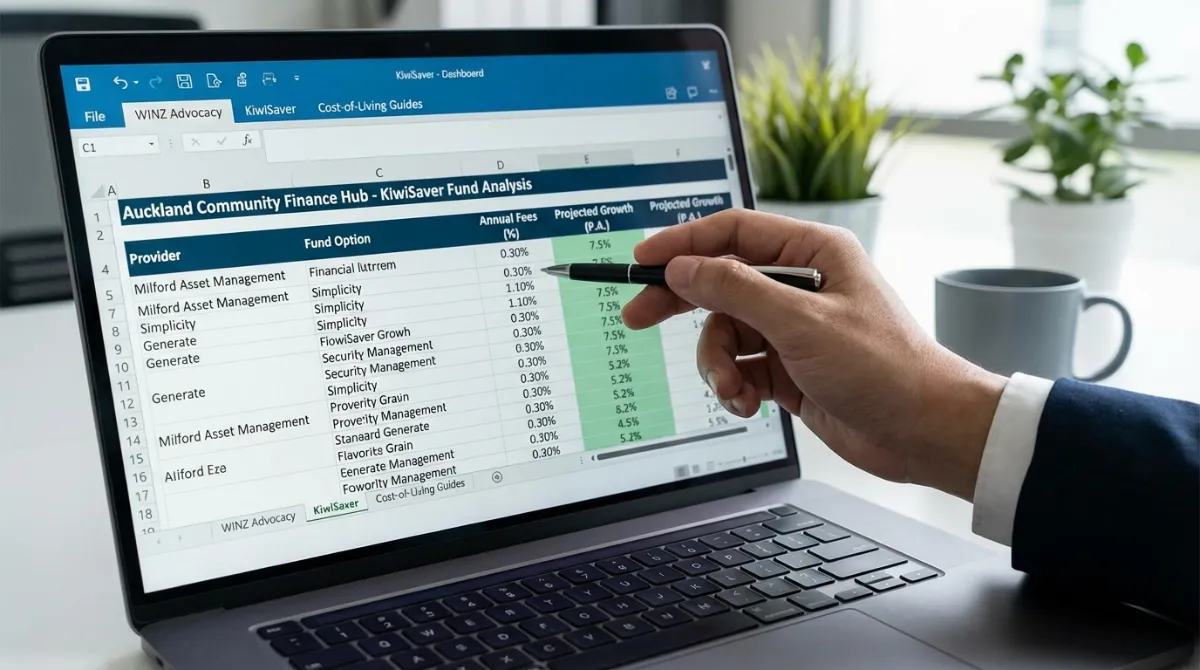
Performing a thorough KiwiSaver fees comparison is essential. Fees aren’t static; they vary greatly depending on the provider and the type of fund you choose. Generally, passively managed index funds (often labelled ‘growth’ or ‘balanced’ but following an index) tend to have lower fees than actively managed funds, as they don’t require as much research and trading activity.
KiwiSaver Fee Comparison Table (Illustrative Example)
| Provider | Fund Type (e.g., Growth) | Admin Fee (Annual) | Management Fee (% p.a.) | Total Est. Fees (Example) |
|---|---|---|---|---|
| Provider A | Growth (Active) | $36 | 1.25% | High |
| Provider B | Balanced (Index) | $0 | 0.50% | Low |
| Provider C | Conservative (Active) | $24 | 0.75% | Medium |
Note: This table is illustrative. Actual fees vary and should always be verified with the provider’s latest Product Disclosure Statement (PDS).

Is a Low-Fee Fund Always the Best Option?
While seeking a low fee KiwiSaver is a smart strategy, it’s not the only factor. A fund with slightly higher fees might justify them if it consistently delivers superior net returns (after fees) or offers specific features important to you, such as ethical investing screens or robust member services.
Consider:
- Fund Performance: Does a higher-fee fund consistently outperform its lower-fee counterparts in the same risk category, even after fees? Past performance is no guarantee of future results, but it’s a data point.
- Investment Strategy: Active management (higher fees) aims to beat the market, while passive management (lower fees) aims to match it. Both have merits.
- Services & Features: Some providers offer better online tools, educational resources, or access to financial advisors. Weigh these against the costs.

Tools for Calculating Fee Impact
Several online calculators can help you visualise the long-term impact of different KiwiSaver fees. These tools allow you to input your current balance, contributions, projected returns, and various fee structures to see how your final retirement sum might differ.
- Sorted.org.nz: The New Zealand Financial Markets Authority (FMA) provides excellent, unbiased tools and guides, including fee calculators.
- KiwiSaver Provider Websites: Many providers offer their own calculators, which can be useful for comparing their specific fund options.
- Financial Advisors: For personalised calculations and advice, a qualified financial advisor can provide tailored insights.
Transparency in Fee Reporting
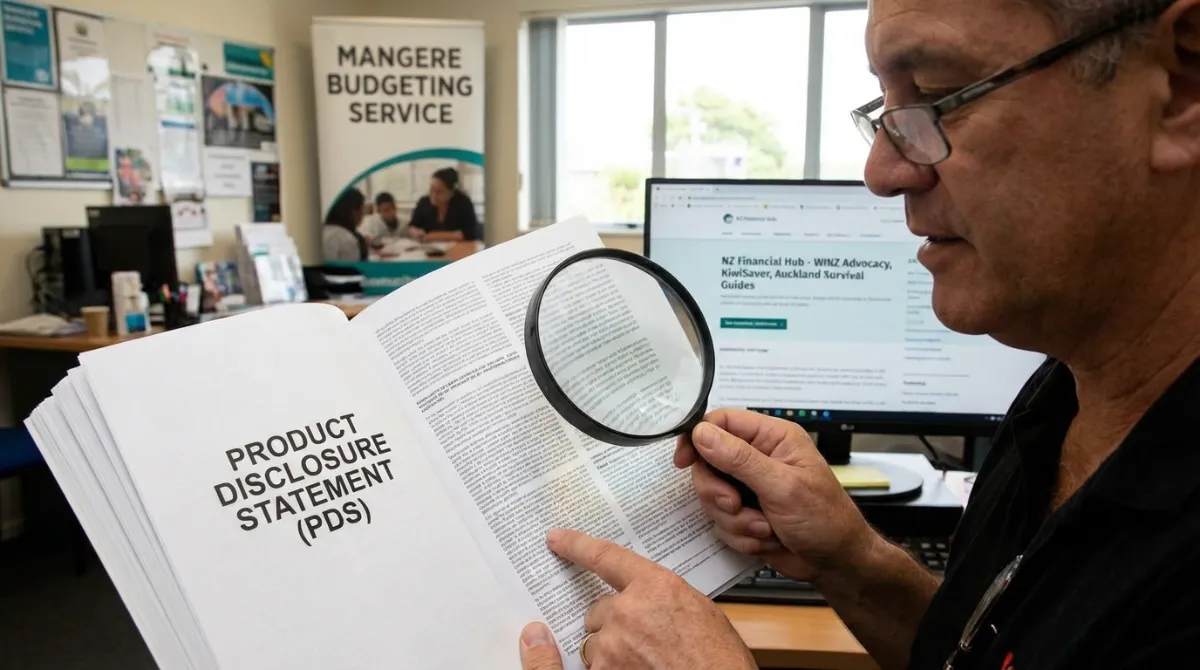
Thanks to regulations from the FMA, KiwiSaver providers are required to be transparent about their fees. The primary document for this is the Product Disclosure Statement (PDS). Every KiwiSaver scheme has one, and it’s your go-to source for detailed information on all fees and charges. Always ensure you read the latest PDS before making any decisions.
Key sections to scrutinise in the PDS:
- ‘What are the fees?’ section: This directly outlines all applicable fees.
- ‘How is your money managed?’ section: Provides context on the fund’s strategy, which often correlates with fee levels.
- ‘Performance’ section: Look at net returns (after fees) to understand the real-world performance.
Mangere Budgeting’s Advice on Managing Fees
At Mangere Budgeting, we empower New Zealanders to make informed financial decisions. When it comes to managing your KiwiSaver fees, here’s our actionable advice:
- Review Annually: Don’t set and forget. Make it a habit to review your KiwiSaver fees and fund performance at least once a year.
- Compare Actively: Use tools like Sorted.org.nz to regularly conduct a KiwiSaver fees comparison across various providers.
- Match Fees to Value: Don’t just chase the lowest fee. Ensure the fees align with the value you receive in terms of fund strategy, ethical investments, and member services.
- Understand Your Risk Profile: Ensure your fund type (and its associated fees) matches your comfort level with investment risk and your long-term goals.
- Seek Guidance: If you’re unsure, reach out to a financial advisor or contact us at Mangere Budgeting for general guidance and resources.
Frequently Asked Questions
What is a good management fee for KiwiSaver?
A ‘good’ management fee depends on the fund type and services offered. For index-tracking growth funds, anything under 0.6% p.a. is generally considered competitive and a strong contender for a low fee KiwiSaver. Actively managed funds might range from 0.8% to 1.5% p.a. Always consider the net returns after fees, not just the fee percentage in isolation.
Are KiwiSaver fees tax deductible?
No, generally, KiwiSaver fees are not tax deductible for individual members. The fund itself pays tax on its investment income, but you cannot claim a tax deduction for the administration or management fees you pay.
How do I find out my KiwiSaver fees?
You can find out your specific KiwiSaver fees by checking your annual statement from your provider, reviewing the latest Product Disclosure Statement (PDS) for your fund, or logging into your online KiwiSaver account. These documents will detail all applicable administration, management, and other charges.
Should I switch KiwiSaver providers for lower fees?
Switching providers solely for lower fees can be a good strategy, especially if you find a fund with a significantly better fee structure that still aligns with your investment goals and risk tolerance. However, always consider the fund’s overall performance, investment strategy, and any services you might lose before making a move. There are usually no fees to switch providers within KiwiSaver.
References & Sources
- Financial Markets Authority (FMA) – KiwiSaver Information
- Sorted.org.nz – Your Independent Guide to Money
- Interest.co.nz – KiwiSaver Fees Comparison (Illustrative Data Source)
- Product Disclosure Statements (PDS) from various KiwiSaver providers (e.g., ANZ, BNZ, Simplicity, Booster).