
Saving & KiwiSaver Basics
Discover how to save money NZ effectively with practical strategies and learn the basics of KiwiSaver for retirement and first home goals. Get expert tips from Mangere Budgeting.

mangerebudgeting.org.nz
What You Will Learn
Discover how to save money NZ effectively with practical strategies and learn the basics of KiwiSaver for retirement and first home goals. Get expert tips from Mangere Budgeting.
Saving & KiwiSaver Basics: Your Guide to Financial Freedom in NZ
Are you wondering how to save money NZ and build a stronger financial future for yourself and your whānau? In today’s economic climate, mastering personal finance is more crucial than ever. This comprehensive guide, brought to you by Mangere Budgeting, will demystify the essential strategies for saving money effectively and introduce you to KiwiSaver, New Zealand’s unique retirement and first-home savings scheme. We’ll explore practical tips, delve into KiwiSaver’s intricacies, and empower you with the knowledge to make informed financial decisions. Let’s embark on this journey to financial resilience together.
Practical Saving Strategies: Your Roadmap to a Healthier Wallet
Learning how to save money NZ isn’t about deprivation; it’s about making conscious choices that align with your financial aspirations. Whether you’re saving for a rainy day, a big purchase, or future security, these strategies provide a solid foundation.
1. Set Clear Financial Goals
Define what you’re saving for. Is it an emergency fund, a new car, a holiday, or a deposit for a house? Specific goals give your savings purpose and make it easier to stay motivated. Break large goals into smaller, manageable milestones.
2. Create a Realistic Budget
A budget is your financial GPS. List all your income and expenses. This helps you understand where your money is actually going. Tools like spreadsheets or budgeting apps can simplify this process. Be honest with yourself about your spending habits.
3. Track Your Spending Diligently
Once you have a budget, track every dollar you spend. This reveals areas where you might be overspending and highlights opportunities to cut back. Small, consistent savings add up significantly over time.
4. Automate Your Savings
The easiest way to save is to make it automatic. Set up an automatic transfer from your everyday account to a dedicated savings account on payday. Treat your savings like a bill you have to pay, ensuring consistency.
“The habit of saving is itself an education; it fosters every virtue, teaches self-denial, cultivates a sense of order, trains to forethought, and so broadens the mind.” – T.T. Munger
5. Reduce Unnecessary Expenses
Review your budget for non-essential costs. Can you reduce subscriptions, eat out less, or find cheaper alternatives for services? Even small cuts can free up significant funds. Consider the ‘latte factor’ – how much you spend on small daily luxuries.
6. Seek Expert Advice
Don’t be afraid to ask for help. Organisations like Mangere Budgeting offer free, confidential advice to help you manage your money, get out of debt, and create a sustainable savings plan tailored to your unique situation.
Introduction to KiwiSaver: What it is & How it Works
Beyond day-to-day savings, understanding KiwiSaver is crucial for long-term financial wellbeing in New Zealand. KiwiSaver is a voluntary, work-based savings scheme designed to help New Zealanders save for their retirement or their first home.
When you join KiwiSaver, a portion of your income (3%, 4%, 6%, 8%, or 10%) is automatically deducted from your pay and invested on your behalf. But it’s not just your contributions that grow your balance:
- Employer Contributions: If you’re employed, your employer must contribute at least 3% of your gross salary or wages to your KiwiSaver, on top of your pay (provided you are contributing).
- Government Contributions (Member Tax Credit): For every $1 you contribute (up to $1,042.86 per year), the government adds 50 cents, up to a maximum of $521.43 per year. To get the full Member Tax Credit, you need to contribute at least $1,042.86 yourself between 1 July and 30 June each year.
- Investment Returns: Your money is invested by a KiwiSaver provider, and over time, these investments aim to grow your balance.

KiwiSaver is generally locked in until you reach NZ Superannuation qualifying age (currently 65), though there are exceptions for first home withdrawals and significant financial hardship. It’s a powerful tool for building substantial wealth over decades.
Choosing a KiwiSaver Fund: Making Informed Investment Decisions
Once you’re in KiwiSaver, one of the most important decisions is choosing the right fund for you. Your choice depends heavily on your risk tolerance and your investment timeframe. Don’t just stick with the default fund; take an active role.
1. Understand Your Risk Profile
Funds are generally categorised by risk level: Conservative, Balanced, Growth, and Aggressive. Younger individuals with a long time until retirement might opt for Growth funds (higher potential returns, higher risk), while those closer to retirement might prefer Conservative funds (lower returns, lower risk).
2. Research Fund Types
- Conservative Funds: Primarily invested in income assets like cash and fixed interest. Lower risk, lower expected returns.
- Balanced Funds: Mix of income and growth assets (shares, property). Moderate risk and returns.
- Growth Funds: Higher proportion of growth assets. Higher risk, higher expected returns, typically for longer-term investors.
3. Compare Providers and Fees
Different KiwiSaver providers offer various funds and charge different fees. Even small differences in fees can have a significant impact on your final balance over 20-30 years. Compare administration fees, management fees, and performance fees.
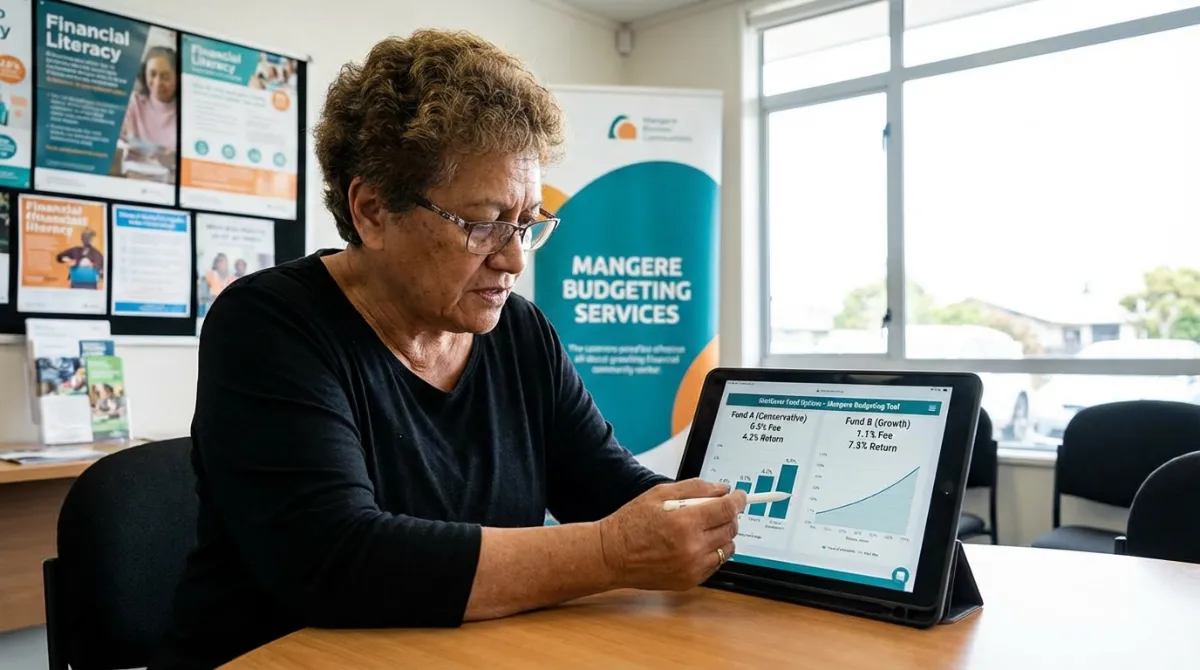
4. Review Past Performance (with caution)
While past performance is not a guarantee of future returns, it can provide insight into how a fund has performed under different market conditions. Look for consistency rather than short-term spikes.
5. Consider Ethical Investments
Many providers now offer socially responsible investment (SRI) options. If you prefer your money not to be invested in certain industries (e.g., fossil fuels, tobacco), look for funds with ethical screening policies.
Using KiwiSaver for a First Home: Realising Your Dream
For many New Zealanders, owning a home is a significant life goal, and KiwiSaver can be a powerful ally. You can withdraw most of your KiwiSaver savings to put towards a deposit for your first home, provided you meet certain criteria.
Eligibility for First Home Withdrawal:
- You must have been a KiwiSaver member for at least three years.
- You must be buying your first home (with some exceptions for previous homeowners who meet certain criteria).
- You must live in the home you’re buying (not for investment property).
- You must leave a minimum balance of $1,000 in your KiwiSaver account.
In addition to the withdrawal, you may also be eligible for the Government’s First Home Grant and First Home Loan, administered by Kāinga Ora.

First Home Grant (formerly HomeStart Grant):
This grant provides eligible first-home buyers with up to $5,000 for an existing home or $10,000 for a new home, per person, to put towards their deposit. Eligibility depends on income caps, house price caps in your region, and your KiwiSaver contributions.
First Home Loan:
Kāinga Ora provides First Home Loans to eligible buyers, allowing them to purchase a home with a deposit of just 5%. This is especially helpful for those who struggle to save the traditional 20% deposit. You still need to meet income and house price caps.
Utilising KiwiSaver for a first home requires careful planning. It’s advisable to speak with your KiwiSaver provider, a financial advisor, or Mangere Budgeting well in advance of your home-buying journey to understand all your options and obligations.
Frequently Asked Questions (FAQ)
How much of my income should I aim to save?
A common guideline is the 50/30/20 rule: 50% for needs, 30% for wants, and 20% for savings and debt repayment. However, this is just a guide. What’s most important is consistency and finding a savings rate that is sustainable for your individual circumstances. Even small amounts, saved regularly, make a big difference.
Can I withdraw my KiwiSaver funds early?
KiwiSaver funds are generally locked in until you reach the NZ Superannuation qualifying age (currently 65). However, there are specific exceptions for first home withdrawals, significant financial hardship, serious illness, or permanent emigration (to a country other than Australia).
What’s the difference between Conservative, Balanced, and Growth KiwiSaver funds?
These terms refer to the asset allocation and associated risk level. Conservative funds mostly hold low-risk assets like cash and fixed interest. Balanced funds have a mix of lower-risk and higher-risk (growth) assets like shares and property. Growth funds have a higher proportion of growth assets, aiming for higher returns but also carrying higher risk. Your choice should align with your investment timeframe and risk tolerance.
Do I have to contribute to KiwiSaver if I’m employed?
No, KiwiSaver is a voluntary scheme. If you’re employed and automatically enrolled, you have a period to opt-out. If you’re not automatically enrolled, you can choose to join. However, contributing offers significant benefits like employer contributions and the government’s Member Tax Credit, making it a very worthwhile long-term savings tool.
Where can I get more help with budgeting and saving in NZ?
Organisations like Mangere Budgeting offer free, confidential financial advice and support services. They can help you create a budget, manage debt, and develop a personalised savings plan. TheSorted.org.nz is also a great government-backed resource for financial education.
References & Sources
- Financial Services Council (FSC) NZ. (Ongoing). KiwiSaver Reports & Insights. Retrieved from www.fsc.org.nz
- Inland Revenue Department (IRD). (Ongoing). KiwiSaver Information. Retrieved from www.ird.govt.nz/kiwisaver
- Kāinga Ora. (Ongoing). First Home Grants & Loans. Retrieved from kaingaora.govt.nz
- TheSorted.org.nz. (Ongoing). Budgeting & Saving Tools. Retrieved from www.sorted.org.nz
- Commission for Financial Capability. (Ongoing). National Financial Capability Survey. Retrieved from www.cffc.govt.nz