
Creating a Realistic Budget: Income & Expenses
Learn how to make a budget NZ with our step-by-step guide. Create your personal budget template NZ, manage income & expenses, and master your finances.

mangerebudgeting.org.nz
What You Will Learn
Learn how to make a budget NZ with our step-by-step guide. Create your personal budget template NZ, manage income & expenses, and master your finances.
Are you feeling the pinch of New Zealand’s cost of living? Do your expenses often outpace your income, leaving you wondering where your money went? You’re not alone. In today’s economic climate, mastering your finances is more crucial than ever, and it all starts with one fundamental tool: a realistic budget. Learning how to make a budget NZ can transform your financial outlook, helping you gain control, reduce stress, and work towards your goals.
This comprehensive guide will walk you through creating a practical personal budget template NZ residents can use to thrive. Whether you’re navigating WINZ entitlements, optimising your KiwiSaver, or simply trying to survive Auckland’s expenses, a solid budget is your first step to financial freedom.
Table of Contents
Why Budgeting is Essential for Financial Health
A budget isn’t about restricting yourself; it’s about empowerment. It’s a clear roadmap that shows you exactly where your money comes from and where it goes. This clarity is the foundation of good financial health, enabling you to make informed decisions and avoid common pitfalls.
For many New Zealanders, particularly in high-cost cities like Auckland, the margin for error is slim. A budget helps you:
- Gain Control: Understand your cash flow and feel more in command of your money.
- Identify Waste: Pinpoint unnecessary spending that can be redirected towards savings or debt repayment.
- Achieve Goals: Save for a house deposit, a child’s education, or that well-deserved holiday.
- Reduce Stress: Financial uncertainty is a leading cause of stress. A budget provides peace of mind.
- Prepare for the Unexpected: Build an emergency fund for those ‘just in case’ moments.
“Understanding your money flow is the first step to financial freedom. A budget illuminates your path, turning uncertainty into clarity.” – Mangere Budgeting Services
Step-by-Step Guide to Creating Your First Budget
Ready to take charge? Here’s your practical, step-by-step guide to creating a functional budget that works for you, keeping New Zealand’s unique financial landscape in mind.
1. Identifying All Your Income Streams
Start by listing every single source of money coming into your household. Be thorough:
- Salary/Wages: Your regular pay (after tax).
- WINZ Payments: Any benefits or subsidies from Work and Income New Zealand.
- Side Gigs/Freelance Work: Income from additional jobs.
- Investments: Dividends, interest, rental income.
- Child Support/Alimony: Regular payments received.
- Other: Any other regular or irregular income.
Calculate your total monthly income. If your income varies, use an average or a conservative estimate.
2. Tracking Fixed vs. Variable Expenses
Now, let’s look at where your money goes. Categorise your expenses into two main types:
- Fixed Expenses: These are usually the same amount each month and are difficult to change in the short term. Examples include rent/mortgage, loan repayments, insurance premiums, KiwiSaver contributions, and regular subscriptions.
- Variable Expenses: These fluctuate month-to-month and offer more flexibility for adjustment. Examples include groceries, utilities (electricity, internet), transport (petrol, public transport), dining out, entertainment, and personal care.
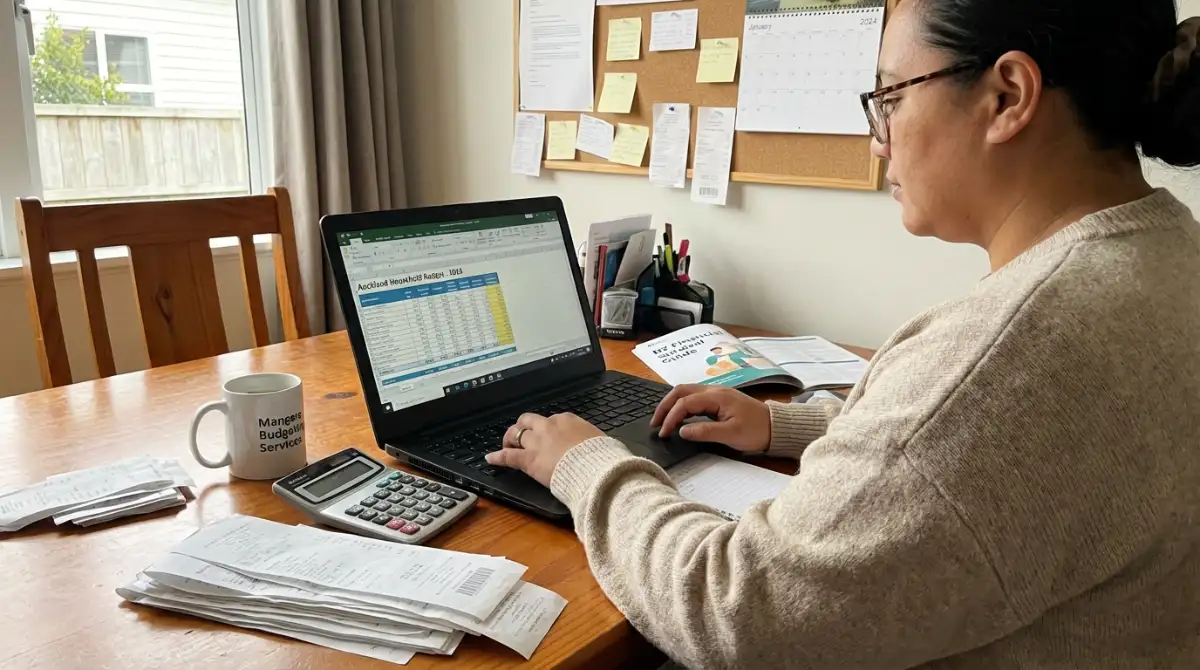
Track your spending diligently for at least a month – every coffee, every bill, every grocery run. Use a notebook, a spreadsheet, or a budgeting app. This is crucial for understanding your actual spending habits, not just what you think they are.
3. Choosing the Right Budgeting Method
Once you have your income and expenses, it’s time to choose a budgeting framework. Here are popular methods:
- The 50/30/20 Rule: A simple and popular method.
- 50% Needs: Essential living expenses (housing, utilities, groceries, transport).
- 30% Wants: Discretionary spending (dining out, entertainment, hobbies).
- 20% Savings & Debt Repayment: Building an emergency fund, paying off high-interest debt, KiwiSaver, investments.
- Zero-Based Budgeting: Every dollar is assigned a job (spent, saved, or invested). This requires meticulous planning but gives you maximum control.
- Envelope System: For cash users, allocate physical cash into envelopes for different spending categories. When an envelope is empty, you stop spending in that category until the next pay cycle.
4. Free Budgeting Templates and Apps for Kiwis
You don’t need expensive software to manage your money. Many free resources can help you create a personal budget template NZ style:
- Spreadsheets: Google Sheets or Excel offer excellent free templates. You can customise them to include specific NZ-related expenses like rates, power companies, and WINZ grants.
- Money-Saving Websites: Many New Zealand financial literacy websites (like Sorted.org.nz) provide free budgeting tools and templates.
- Budgeting Apps: Apps like PocketSmith (NZ-based, free tier available), Frollo, or even your bank’s app often have budgeting features that link directly to your accounts, making tracking easier.

5. Reviewing and Adjusting Your Budget Regularly
A budget isn’t a set-and-forget tool. Life changes, and so should your budget. Make it a habit to review your budget at least monthly, or whenever a significant life event occurs (new job, moving house, change in family circumstances).
- Compare your actual spending to your budgeted amounts.
- Identify areas where you overspent or underspent.
- Adjust categories based on your real-life experiences and new financial goals.
This iterative process ensures your budget remains a relevant and powerful tool for your financial well-being.
Getting Started with Your Personal Financial Plan
Creating a budget is the cornerstone of a robust personal financial plan. Once you have a handle on your income and expenses, you can start building an emergency fund, tackling debt, optimising your KiwiSaver contributions, and planning for bigger financial milestones. Remember, consistency is key. Even small, consistent steps lead to significant progress over time.
Your Budgeting Action Checklist
Use this checklist to kickstart and maintain your budgeting journey:
- Gather Financial Statements: Collect bank statements, pay slips, and bills for the last 1-3 months.
- Calculate Total Net Income: List all income sources, ensuring you use after-tax figures.
- Categorise All Expenses: Differentiate between fixed and variable costs.
- Track Spending for a Month: Use an app, spreadsheet, or notebook. Be honest!
- Choose a Budgeting Method: Decide on 50/30/20, Zero-Based, or another method.
- Allocate Funds: Assign a dollar amount to each spending category.
- Identify Areas for Saving: Where can you cut back without feeling deprived?
- Set Financial Goals: What are you saving for? (e.g., emergency fund, debt repayment, KiwiSaver boost).
- Schedule Regular Reviews: Plan to review and adjust your budget monthly or quarterly.
- Seek Expert Advice if Needed: Don’t hesitate to contact a financial mentor if you’re stuck (like Mangere Budgeting Services).

Frequently Asked Questions (FAQ)
Q: How do I make a budget in New Zealand?
A: To make a budget in New Zealand, start by listing all your income (including wages, WINZ benefits, and investments). Then, track all your expenses, categorising them into fixed (e.g., rent, loan repayments) and variable (e.g., groceries, entertainment). Choose a budgeting method like the 50/30/20 rule, allocate funds, and regularly review and adjust your budget to fit your financial goals and the local cost of living.
Q: What’s a good personal budget template for New Zealanders?
A: A good personal budget template for New Zealanders should include sections for all NZ-specific income (like WINZ payments, KiwiSaver contributions as an expense/saving) and expenses (e.g., power bills from local providers, specific insurance types, rates). Many free templates are available from Sorted.org.nz, or you can create a custom spreadsheet. The key is to make it reflect your unique financial situation and goals within the NZ context.
Q: How can budgeting help with the Auckland cost of living?
A: Budgeting is crucial for managing the high cost of living in Auckland by giving you a clear picture of your finances. It helps you identify where your money goes, find areas to cut back (like discretionary spending on dining out), and ensure you’re prioritising essential expenses like rent and transport. It can also help you allocate funds for savings, debt repayment, and even optimise for better housing or transport options.
Q: Should KiwiSaver contributions be included in a budget?
A: Yes, KiwiSaver contributions should definitely be included in your budget. Treat them as a fixed expense or, even better, a critical part of your savings and investment category (like the 20% in the 50/30/20 rule). While it’s a long-term saving, it’s a regular outgoing from your pay and needs to be accounted for in your monthly cash flow.
Q: What if I struggle to stick to my budget?
A: It’s common to struggle at first! If you’re finding it hard, review your budget to ensure it’s realistic. Are your allocations too restrictive? Did you forget certain expenses? Try a different budgeting method. Don’t be afraid to seek support from a financial mentor or budgeting service (like Mangere Budgeting Services) who can provide personalised advice and strategies tailored to your situation.
References/Sources
- Sorted.org.nz – New Zealand’s independent money guide.
- Stats NZ – Official statistics on income and living costs in New Zealand.
- Mangere Budgeting Services – Expertise in local financial advocacy and support.
- ANZ Bank New Zealand – Financial education resources.