Energy & Internet Bill Comparison
Discover how to find the best power companies NZ and affordable internet plans. Compare, save, and understand your utility bills with expert tips from Mangere Budgeting.
mangerebudgeting.org.nz
What You Will Learn
Discover how to find the best power companies NZ and affordable internet plans. Compare, save, and understand your utility bills with expert tips from Mangere Budgeting.
Energy & Internet Bill Comparison: Finding the Best Power Companies NZ & Beyond
Navigating the complex world of utility bills can feel overwhelming, but smart comparisons can lead to significant savings. Discover how to find the best power companies NZ and affordable internet plans for your household.
Table of Contents
How to Compare Electricity Providers
Finding the best power companies NZ has to offer requires more than just glancing at advertised rates. It’s about understanding your household’s unique energy consumption and matching it with a provider that offers the most suitable plan. This investigation can unlock substantial savings over time.
1. Gather Your Current Bill & Usage Data
Your current electricity bill provides crucial information: average monthly usage (kWh), daily fixed charges, and any prompt payment discounts. Knowing your typical consumption is fundamental for accurate comparisons.
2. Utilise Comparison Websites
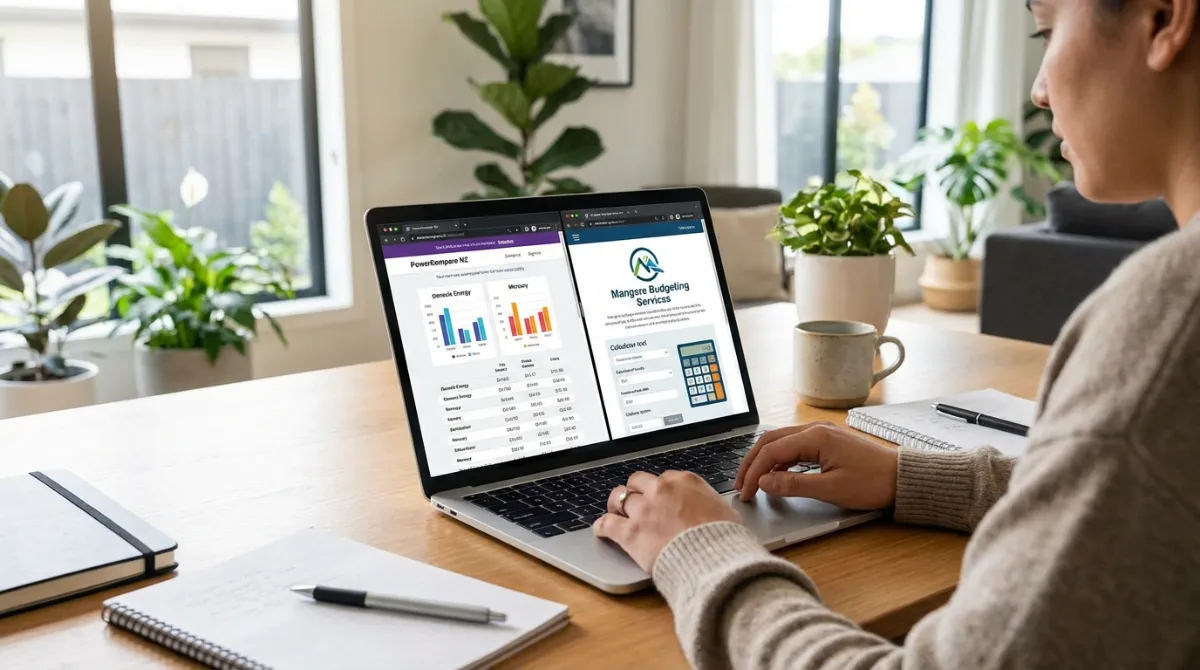
Independent comparison websites in NZ (like Powerswitch by Consumer NZ) allow you to input your details to see tailored plans. These tools help you quickly identify potential savings and which NZ electricity providers might suit you best.
3. Understand Different Plan Types
- Standard Plans: Flat rate for all power consumed.
- Time-of-Use Plans: Different rates for peak/off-peak, ideal if you can shift usage.
- Pre-Pay Plans: Pay as you go, often with no fixed term.
- Bundled Plans: Combine electricity with gas or internet for potential discounts.
4. Look Beyond Just Price Per kWh
Consider daily fixed charges, contract terms, early exit fees, customer service ratings, and whether the company offers green energy options or loyalty rewards. A slightly higher kWh rate might be offset by lower daily charges or better service.
“The true cost of your electricity isn’t just the advertised rate; it’s a combination of daily charges, usage patterns, and any hidden fees. Always read the fine print!”
Key Factors for Electricity Provider Comparison
| Feature | Low User Needs | High User Needs | Eco-Conscious Needs |
|---|---|---|---|
| Price per kWh | Often higher, but balanced by low daily charge | Crucial for overall cost savings | May pay a premium for renewable energy |
| Daily Fixed Charge | Very low or zero is ideal | Less critical than kWh rate | Can vary, check for green options |
| Contract Length/Terms | Flexible, no fixed terms preferred | Often 12-24 months for better rates | May have specific green energy contracts |
Finding Affordable Internet Plans
In today’s connected world, a reliable and affordable internet connection is essential. The market for internet service providers (ISPs) in NZ is competitive, meaning there are always opportunities to find a better deal.

1. Assess Your Internet Needs
How many people use the internet? What for – streaming, gaming, work-from-home, basic browsing? This determines the speed and data cap you require. Don’t pay for ultra-fast fibre if you only check emails.
2. Compare Connection Types
- Fibre: Fastest and most reliable, ideal for heavy users. Widely available in urban NZ.
- ADSL/VDSL: Copper-based, slower but suitable for basic usage in areas without fibre.
- Wireless/4G/5G Broadband: Uses mobile networks, great for rural areas or portability, but can have data caps.
3. Use Online Comparison Tools
Websites like Broadband Compare can help you compare internet plans from various broadband deals NZ providers. Enter your address to check availability and see tailored offers.
4. Look Out for Promotional Offers & Bundles
ISPs frequently offer introductory deals, sign-up bonuses, or discounts when you bundle internet with power, mobile, or home phone services. These can significantly reduce your monthly outgoing.
“Many internet providers offer loyalty bonuses or better deals to new customers. Don’t be afraid to switch or negotiate with your current provider when your contract is up.”
Understanding Your Bills & Usage
Knowledge is power, especially with utility bills. Demystifying the charges and understanding your consumption patterns can help you identify areas for savings and ensure you’re not overpaying.
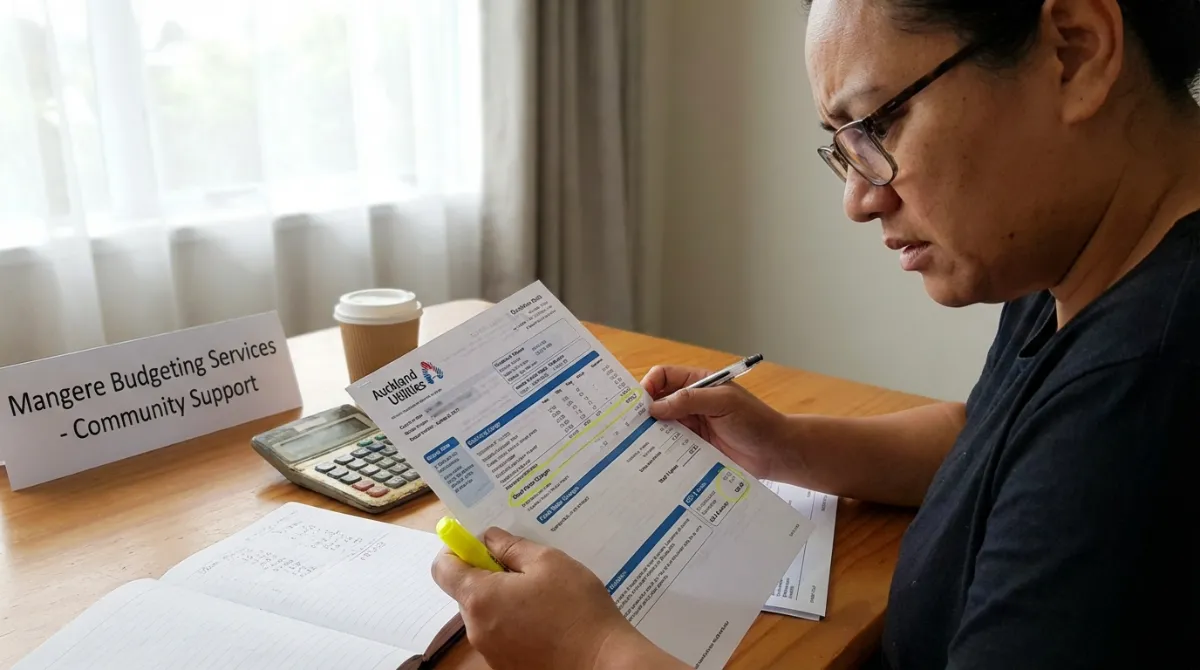
Decoding Your Electricity Bill
- Daily Fixed Charge: A non-negotiable daily fee for getting electricity to your property.
- Variable Usage Charge (kWh): The cost per unit (kilowatt-hour) of electricity consumed. Your usage habits greatly impact this.
- GST: A 15% tax applied to your total bill.
- Prompt Payment Discount: A discount offered if you pay your bill by the due date. Don’t miss this!
Interpreting Your Internet Bill
- Monthly Plan Fee: The core cost for your chosen speed and data allowance.
- Router Rental/Purchase: Some providers include a router; others charge a rental or require purchase.
- Installation Fees: One-off fees for new connections (often waived during promotions).
- Add-ons: Charges for extra data, static IP addresses, or premium support.
Stat Callout:
The average New Zealand household uses approximately 7,000-8,000 kWh of electricity per year. Understanding your consumption relative to this can highlight potential for savings.
Tips for Reducing Utility Costs
Once you’ve found the best power companies NZ and internet plans, the next step is to actively reduce your consumption. Small changes can lead to significant savings over time.

Electricity Savings
- Insulate Your Home: Good insulation, draught stopping, and double glazing are highly effective at reducing heating costs.
- Efficient Lighting: Switch to LED bulbs, which use up to 80% less energy.
- Appliance Awareness: Unplug chargers and appliances to avoid ‘phantom load’. Use major appliances during off-peak hours if on a time-of-use plan.
- Smart Heating: Use heat pumps efficiently, set thermostats to 18-20°C, and only heat rooms you are using.
- Water Heating: Hot water is a major energy user. Consider a low-flow showerhead and ensure your hot water cylinder is insulated.
Internet Savings
- Review Your Plan Annually: Re-evaluate your plan yearly; technology and prices change rapidly.
- Downgrade Speed if Unused: If your fibre plan is excessively fast for your actual use, consider a slightly slower, cheaper plan.
- Optimise Wi-Fi: Ensure your router is centrally located and free from obstructions for optimal signal.
- Monitor Data Usage: If you’re on a capped plan, monitor your usage to avoid excess data charges.
Frequently Asked Questions (FAQ)
What are the best power companies in NZ for my needs?
The ‘best’ company depends entirely on your specific circumstances: location, household size, energy consumption (low vs. high user), and priorities (e.g., green energy, customer service, lowest price). Using an independent comparison tool like Powerswitch is the best way to find a personalised recommendation.
How often should I compare electricity and internet plans?
It’s generally recommended to compare plans at least once a year, or whenever your fixed-term contract is nearing its end. The market is dynamic, and new deals or providers emerge frequently. It’s also wise to check if your usage patterns have changed significantly.
What factors should I consider when choosing a power company?
Key factors include price per kWh, daily fixed charges, prompt payment discounts, contract length, early termination fees, customer service reputation, billing frequency, and whether they offer green energy options or loyalty programs. Always review the full terms and conditions.
Can I switch power or internet providers easily?
Yes, switching is generally straightforward. Your new provider will often handle the entire transfer process, including notifying your old provider. Ensure you check for any early termination fees with your current contract before switching.
What are some common hidden costs in utility bills?
Hidden costs can include early termination fees, late payment penalties, reconnection fees, or extra charges for paper bills. For internet, watch out for router rental fees or exceeding data caps on limited plans. Always clarify these when signing up.
Are there government subsidies or assistance for energy or internet bills in NZ?
Yes, several forms of assistance are available. Work and Income NZ (WINZ) offers assistance like the Winter Energy Payment (seasonal), Accommodation Supplement, or Hardship Assistance for essential costs. It’s best to check the WINZ website or contact Mangere Budgeting for personalised advice.
References/Sources
- Consumer NZ. (n.d.). Powerswitch: Compare electricity and gas prices. Retrieved from https://www.powerswitch.org.nz
- Broadband Compare. (n.d.). Compare NZ Broadband Deals. Retrieved from https://www.broadbandcompare.co.nz
- EECA (Energy Efficiency and Conservation Authority). (n.d.). Energywise Home. Retrieved from https://www.eeca.govt.nz/energywise
- Work and Income NZ (WINZ). (n.d.). Assistance for essential costs. Retrieved from https://www.workandincome.govt.nz/housing-and-health/housing/essential-costs.html