
Budgeting For Large Families Nz
Master budgeting for large families in NZ with expert tips. Learn to manage finances, save money, and build financial resilience in South Auckland.

mangerebudgeting.org.nz
What You Will Learn
Master budgeting for large families in NZ with expert tips. Learn to manage finances, save money, and build financial resilience in South Auckland.
Navigating the financial landscape with a large family in New Zealand can often feel like steering a supertanker through a narrow strait – challenging, but entirely possible with the right charts and a skilled hand. The sheer volume of expenses, from groceries and school fees to activities and unexpected outlays, can quickly overwhelm even the most organised household. If you’re looking for practical, actionable strategies to achieve financial resilience and peace of mind, you’ve come to the right place. This comprehensive guide will illuminate the path to effective budgeting for large families NZ, empowering you to take control of your finances.
At Mangere Budgeting Services, we understand the unique pressures South Auckland families face. This article is crafted to provide expert, approachable advice that resonates with your reality, transforming financial challenges into opportunities for growth and stability.
Table of Contents
What is Budgeting for Large Families NZ?
At its core, budgeting for large families NZ is the strategic process of managing your household income and expenses to ensure financial stability and progress. For larger families, this isn’t just about balancing the books; it’s about anticipating greater demands, optimising every dollar, and fostering a secure environment for all family members.
The unique challenges often include:
- Groceries Galore: Feeding more mouths invariably means higher food bills. Smart shopping, meal planning, and utilising specials become crucial.
- Rising Housing Costs: Larger families often require more space, which can translate to higher rent or mortgage payments, particularly in areas like South Auckland.
- Education and Activities: School fees, uniforms, sports, music lessons, and school trips add up quickly for multiple children.
- Transport: A larger family often means a larger vehicle, more fuel, and potentially higher maintenance costs.
- Healthcare: More family members mean a greater likelihood of medical expenses, prescriptions, and unforeseen health needs.
- Unexpected Surprises: Life with a large family is unpredictable. A robust budget accounts for emergencies and allows for flexibility.
“Budgeting for a large family isn’t about deprivation; it’s about making conscious choices to align your spending with your values and secure your family’s future.”
Understanding these specific challenges is the first step towards building a budget that genuinely serves your family’s needs and aspirations.
Key Benefits of Effective Large Family Budgeting
The effort put into mastering budgeting for large families NZ yields a wealth of benefits that extend far beyond simply having more money in the bank. It creates a ripple effect of positive change throughout your household.
- Financial Peace of Mind: Knowing exactly where your money goes reduces stress and anxiety. You’re proactive, not reactive.
- Achieving Financial Goals: Whether it’s saving for a house deposit, a family holiday, or your children’s tertiary education, a budget provides a clear roadmap to your aspirations.
- Reduced Debt: By living within your means and actively managing expenses, you can avoid accruing unnecessary debt and work towards a debt-free future.
- Improved Communication: Budgeting often requires open discussions about money within the family, fostering transparency and shared responsibility.
- Teaching Financial Literacy: Involving older children in the budgeting process is an invaluable lesson in money management, preparing them for their own financial independence.
- Increased Savings: Identifying areas of overspending allows you to redirect funds into savings, building an emergency fund or investing for the future.
An effective budget is not a straitjacket; it’s a powerful tool that offers freedom, control, and the ability to say ‘yes’ to the things that truly matter to your family.
Step-by-Step Guide: Creating Your Large Family Budget
Building a robust budget for your large family doesn’t have to be daunting. By breaking it down into manageable steps, you can create a system that works for your unique circumstances.
1. Track All Income Sources
Begin by listing every source of income that flows into your household. This includes salaries, wages, benefits (like Working for Families tax credits or Accommodation Supplement), child support, and any other regular earnings. Be precise and use net amounts (after tax). This forms the foundation of your budget.
2. List All Expenses (Fixed vs. Variable)
This is where many families get overwhelmed. Break down your expenses into two categories:
- Fixed Expenses: These are usually the same amount each month and are difficult to change in the short term. Examples for NZ families include rent/mortgage, insurance premiums (house, car, health), loan repayments, and subscriptions.
- Variable Expenses: These fluctuate month-to-month and offer the most flexibility for savings. Think groceries, utilities (power, water – especially for larger families), transport (fuel, public transport), entertainment, clothing, school supplies, and extracurricular activities.
Don’t forget irregular expenses like car registration or annual school fees – divide them by 12 to set aside a monthly amount.

3. Categorise and Analyse Your Spending
Once you have your income and expenses listed, categorise them logically (e.g., Food, Housing, Transport, Utilities, Education, Savings). Now, compare your total income to your total expenses. Ideally, your income should exceed your expenses. If not, this is your first indicator of where you need to make changes.
4. Set Realistic Financial Goals
What do you want your money to do for your family? Short-term goals might be building a $1,000 emergency fund or saving for new school uniforms. Long-term goals could be saving for a house, retirement, or a child’s university fund. Having clear goals provides motivation and direction for your budgeting efforts.
5. Choose a Budgeting Method That Works for You
There are several popular budgeting methods, each with its strengths:
- 50/30/20 Rule: 50% for Needs, 30% for Wants, 20% for Savings/Debt Repayment. This is a great starting point for many.
- Zero-Based Budgeting: Every dollar is assigned a job (expense or saving). This requires more tracking but offers maximum control.
- Envelope System: Physically allocating cash into envelopes for different variable spending categories (e.g., groceries, entertainment). Excellent for visual learners and preventing overspending in specific areas.
For large families, a hybrid approach often works best, perhaps combining digital tracking for fixed expenses with an envelope system for variable categories like groceries or kids’ activities.
6. Regularly Review and Adjust Your Budget
A budget isn’t a one-time task; it’s a living document. Life changes, and so should your budget. Review it at least monthly to see if you’re sticking to it, if your income or expenses have changed, and if your goals are still relevant. Be flexible and adjust as needed.
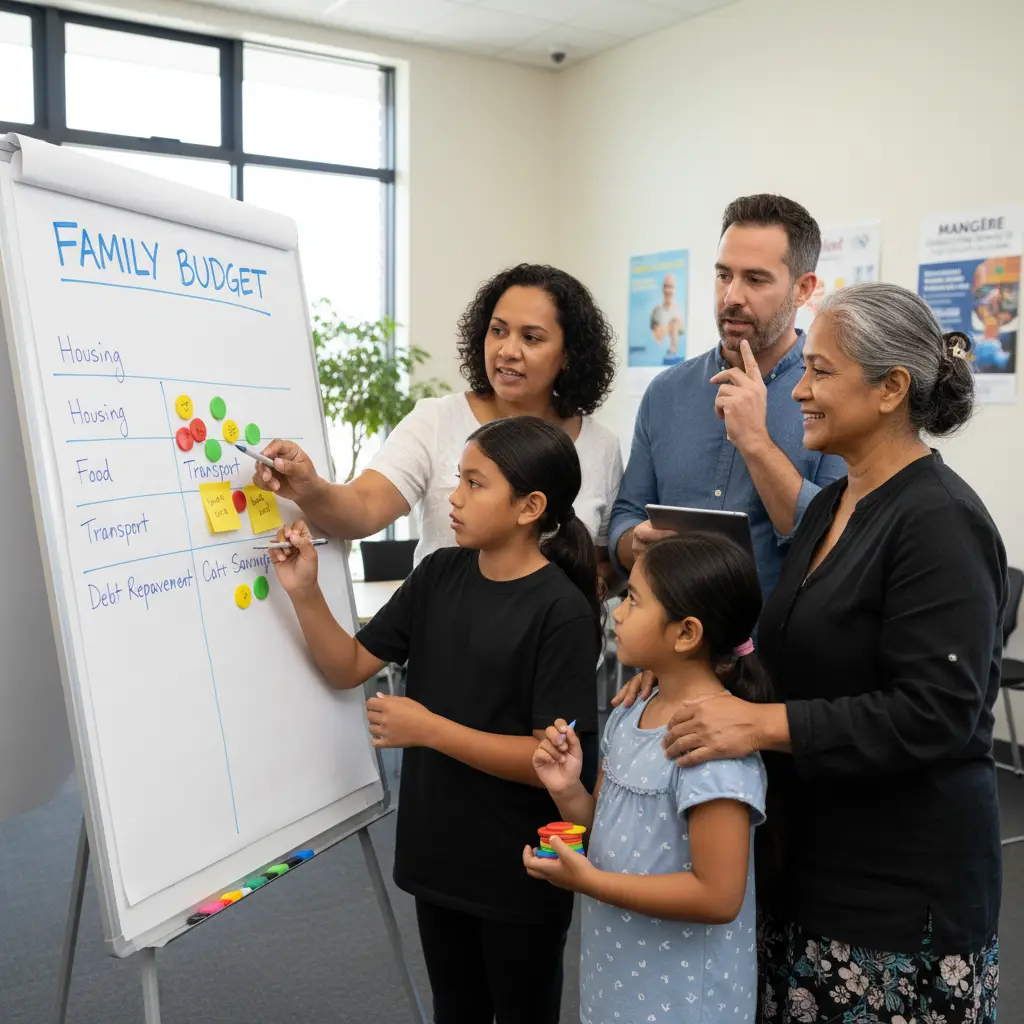
Action Checklist: Practical Tips for Budgeting Success
Beyond the structured steps, here are some actionable strategies to enhance your large family’s financial resilience in New Zealand:
- Meal Plan and Cook in Bulk: Plan your weekly meals around supermarket specials. Cook larger portions and freeze leftovers. This significantly reduces grocery costs and takeaway temptations.
- Utilise Community Resources: Don’t hesitate to reach out to local services. Organisations like Mangere Budgeting Services offer free, confidential advice and support tailored to your situation. Explore food banks or community gardens if needed.
- Shop Smart for Essentials: Compare prices for utilities (power, internet) and insurance. Look for second-hand items for clothing, toys, and even school supplies. Online marketplaces and charity shops are goldmines.
- Teach Kids About Money: Give older children age-appropriate responsibilities with money. Involve them in budgeting discussions, grocery shopping, and understanding the value of items.
- Automate Savings: Set up an automatic transfer from your main account to a savings account each payday. Even small, consistent amounts add up.
- Create an Emergency Fund: Aim to save 3-6 months’ worth of essential expenses. This acts as a buffer against unexpected job loss, illness, or major repairs, preventing you from falling into debt.
- Reduce Energy Consumption: With more people, energy bills can skyrocket. Teach everyone to turn off lights, unplug unused electronics, and consider energy-efficient appliances.

Conclusion
Effective budgeting for large families NZ is a journey, not a destination. It requires dedication, flexibility, and a willingness to learn and adapt. By implementing the strategies outlined in this guide, you’re not just managing money; you’re building a stronger, more resilient future for your entire family.
Remember, you don’t have to navigate this journey alone. Mangere Budgeting Services is here to provide confidential, expert support to South Auckland families, helping you to achieve your financial goals and build lasting stability. Take the first step today – your family’s financial well-being is worth it.
Frequently Asked Questions (FAQ)
Q: What are the biggest budgeting challenges for large families in NZ?
A: The biggest challenges often revolve around high grocery bills, increased utility costs, rising housing expenses for larger homes, and the cumulative cost of education, extracurricular activities, and transport for multiple children. Unexpected expenses also have a larger impact.
Q: How can I save on groceries for a large family in New Zealand?
A: Meal planning, buying in bulk when items are on special, cooking from scratch, utilising leftovers, growing some of your own produce, and comparing prices across different supermarkets or markets can significantly reduce grocery costs.
Q: What budgeting tools or apps are best for NZ families?
A: While specific NZ-centric apps may vary, global apps like YNAB (You Need A Budget) or PocketSmith (NZ-based) are popular. Many banks also offer budgeting tools within their online banking platforms. A simple spreadsheet or even pen and paper can be just as effective if consistently used.
Q: How can I involve my children in the family budgeting process?
A: Involve them in age-appropriate ways. Younger children can help with grocery lists, older children can assist with meal planning, tracking expenses, or setting savings goals for specific family items (like a new game console or a trip). Giving them a small allowance to manage teaches responsibility.
Q: Where can large families in South Auckland get budgeting help?
A: Mangere Budgeting Services offers free, confidential, and culturally appropriate financial advice and support for families in South Auckland. Other national services like MoneyTalks (FinCap) can also connect you with local budgeting advisers.
References/Sources
- Mangere Budgeting Services – Official Website (Implied source of expertise and local context).
- Sorted.org.nz – New Zealand’s free personal finance guide (General budgeting principles).
- Stats NZ – Cost of Living and Household Expenditure Surveys (Data on family expenses).
- Citizens Advice Bureau NZ – Information on financial assistance and benefits.
- Ministry of Social Development – Working for Families Tax Credits information.