
Dealing with Creditors & Collectors
Learn how to deal with debt collectors in NZ effectively. Understand your rights, communication strategies, and how Mangere Budgeting Services can help you achieve financial resilience.

mangerebudgeting.org.nz
What You Will Learn
Learn how to deal with debt collectors in NZ effectively. Understand your rights, communication strategies, and how Mangere Budgeting Services can help you achieve financial resilience.
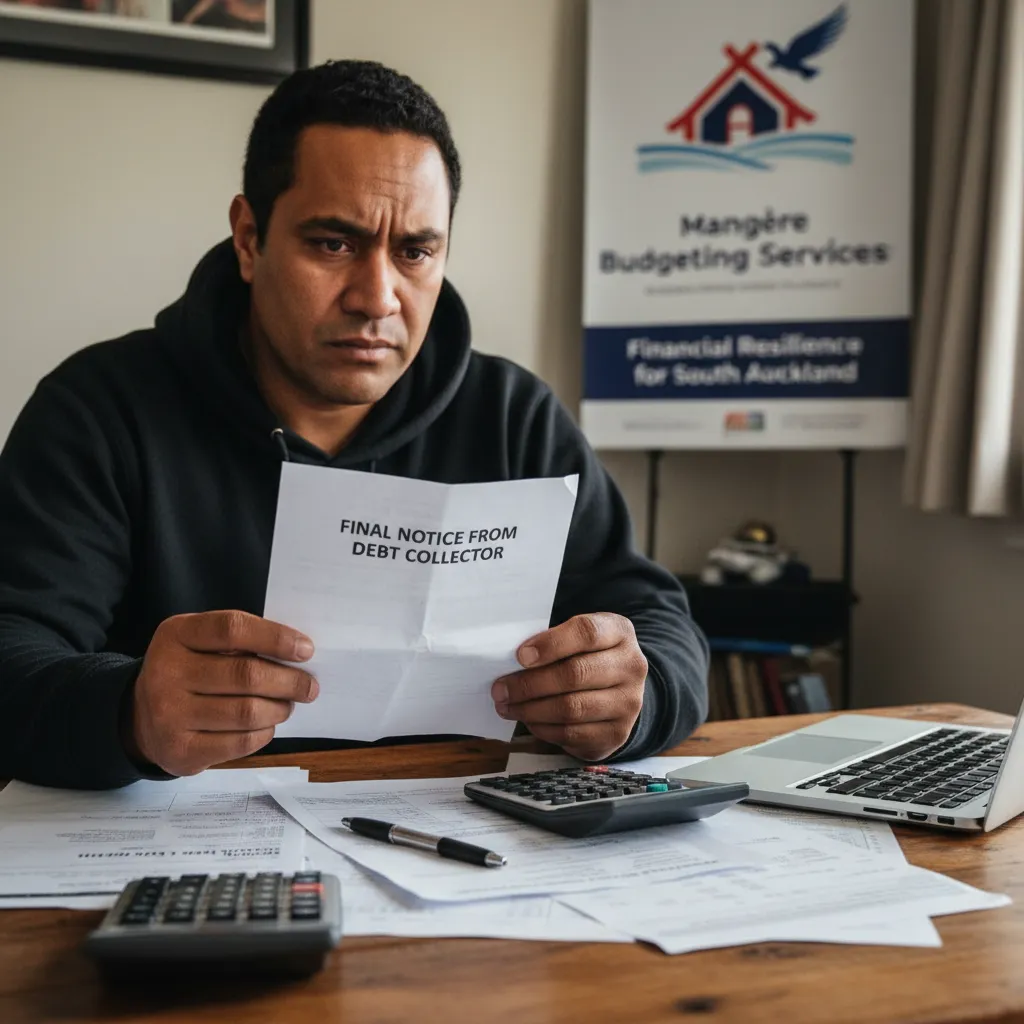
Facing debt collectors in New Zealand can feel overwhelming, a stressful experience that often leaves individuals feeling powerless and confused. The ringing phone calls, official-looking letters, and the pressure to pay can be incredibly daunting. However, it’s crucial to remember that you are not alone, and you have rights. Understanding how to deal with debt collectors NZ effectively and assertively is your first step towards regaining control and finding a path to financial stability. At Mangere Budgeting Services, we empower South Auckland residents with the knowledge and tools to navigate these challenging situations with confidence and peace of mind.
Table of Contents
Navigating Debt Collection in NZ: Your Rights & Key Principles
When you find yourself in debt, it’s easy to feel like you’re at the mercy of your creditors. However, in New Zealand, debtors are protected by various laws and regulations designed to ensure fair treatment. Understanding these protections is fundamental to knowing how to deal with debt collectors NZ.
Knowing Your Consumer Rights
The Fair Trading Act 1986 and the Credit Contracts and Consumer Finance Act 2003 (CCCFA) are your primary shields. These acts prevent misleading or deceptive conduct by businesses, including debt collectors, and ensure that credit contracts are fair and transparent. You have the right to:
- Be treated fairly and respectfully: Debt collectors cannot harass, threaten, or intimidate you.
- Accurate information: They must provide accurate details about the debt, including who the original creditor was and the amount owed.
- Privacy: Your information must be handled according to the Privacy Act 2020.
- Request documentation: You can ask for proof of the debt and the right of the collector to collect it.
Don’t let fear paralyze you. Knowledge of your rights is empowering.
The Role of Debt Collection Agencies
Debt collection agencies act on behalf of original creditors (or sometimes buy the debt themselves) to recover outstanding amounts. While they have a legitimate right to pursue payment, they must operate within the legal framework. Their tactics generally involve written communication, phone calls, and, in some cases, legal action if a resolution isn’t reached.
“Around 1 in 5 New Zealanders reported struggling with debt repayments in the last year, highlighting the widespread nature of financial stress.” – Financial Services Federation.
The Importance of Open Communication
While it might feel counterintuitive, initiating and maintaining clear, respectful communication with your creditors or debt collectors is often the most effective strategy. Ignoring the problem only escalates it. Open dialogue can lead to more manageable repayment plans and reduce stress significantly.
Step-by-Step Guide: How to Deal with Debt Collectors NZ
Navigating conversations with debt collectors requires a strategic approach. Here’s a comprehensive, step-by-step guide to help you manage the situation effectively and protect your interests.
Step 1: Verify the Debt
Never assume a debt is legitimate just because someone says it is. Your first action should always be to verify the debt. Ask for written proof of the debt, including:
- The original creditor’s name.
- The original amount of the debt.
- Dates of the debt and any payments made.
- A copy of the original contract or agreement.
- Proof that the debt collector has the legal right to collect the debt.
Until you receive this information, you are not obligated to discuss payment. Send your request in writing (email or registered mail) so you have a record.
Step 2: Understand Your Financial Position
Before engaging in any repayment discussions, you need a clear picture of your income, expenses, and what you can genuinely afford. Create a detailed budget. This will help you determine a realistic amount you can offer to pay, if any.
Step 3: Communicate Effectively (Written Communication is Key)
While phone calls are common, written communication is always preferable as it provides a paper trail. When communicating, remain calm, polite, but firm. State your position clearly and concisely.
- Respond in writing: Confirm any agreements or discussions in writing.
- Set boundaries: Inform them of your preferred contact method (e.g., mail only) and times.
- Keep records: Document every interaction – dates, times, names of people you spoke to, what was discussed, and copies of all correspondence.
Step 4: Negotiate a Repayment Plan
Once you’ve verified the debt and understand your budget, propose a realistic repayment plan. Debt collectors are often willing to negotiate if they see you’re serious about resolving the debt. This might include:
- Lower monthly payments: Stretching out the repayment period.
- Lump-sum settlement: If you can get a lump sum, you might negotiate to pay less than the full amount.
- Freezing interest/fees: Ask if they can stop adding interest or late fees.
Get any agreed-upon repayment plan or settlement offer in writing before making any payments.
Step 5: Stick to Your Agreement (or Re-negotiate if needed)
Once an agreement is reached, adhere to it strictly. If your financial situation changes and you can no longer meet the agreed payments, contact the debt collector immediately to explain your situation and attempt to re-negotiate. Proactive communication is always better than defaulting on an agreement.
Step 6: When to Seek Professional Help
If the debt is complex, you feel overwhelmed, or the collectors are being unreasonable, don’t hesitate to seek professional advice. Organisations like Mangere Budgeting Services offer free and confidential financial mentoring. They can:
- Help you understand your rights.
- Assist with budgeting and creating a repayment plan.
- Mediate with creditors on your behalf.
- Advise on options like insolvency if necessary.

Avoiding Aggressive Tactics and Seeking Mediation
While most debt collectors operate professionally, some may employ tactics that push the boundaries of what’s acceptable. Knowing the difference and how to respond is vital.
What Constitutes Harassment?
Debt collectors are prohibited from engaging in unfair or deceptive practices. This includes:
- Calling you at unreasonable hours (e.g., late at night or very early morning).
- Calling you excessively, specifically to annoy or harass.
- Threatening violence or legal action that they cannot or do not intend to take.
- Discussing your debt with third parties without your permission (e.g., family, friends, employers).
- Using offensive language.
- Making false or misleading statements.
If you believe you are being harassed, take immediate action.
Documenting Everything
Your best defense against aggressive tactics is meticulous record-keeping. Keep a log of every interaction:
- Date and time of calls.
- Name of the person you spoke with.
- A summary of the conversation.
- Any threats or inappropriate language used.
- Copies of all letters, emails, and text messages.
This documentation will be invaluable if you need to make a complaint or seek legal advice.
The Power of Financial Mentoring & Mediation
Financial mentors, like those at Mangere Budgeting Services, can act as a buffer between you and debt collectors. They can help you prepare responses, negotiate on your behalf, and ensure your rights are respected. If a debt collector is particularly difficult, formal mediation through services like the New Zealand Dispute Resolution Centre (NZDRC) or the Financial Services Complaints Ltd (FSCL) for specific financial service providers can be an effective way to reach a fair resolution outside of court.
Action Checklist: Dealing with Aggressive Debt Collectors
- Do Not Engage Emotionally: Stay calm and factual.
- Request All Communication in Writing: This creates a record.
- State Your Rights: Remind them of the Fair Trading Act and CCCFA.
- Document Every Interaction: Keep detailed notes.
- Inform Them of Harassment: Clearly state if their conduct is inappropriate.
- Contact a Financial Mentor: Get expert support and advocacy.
- Complain to the Commerce Commission: If harassment persists, they can investigate.

Beyond Debt Collection: Building Financial Resilience
Successfully dealing with debt collectors is a significant achievement, but it’s also an opportunity to build stronger financial foundations for the future. The experience can be a powerful catalyst for positive change.
Budgeting for a Brighter Future
A well-structured budget is the cornerstone of financial resilience. It allows you to track where your money goes, identify areas for savings, and allocate funds wisely. Regular budgeting helps prevent future debt by ensuring you live within your means and save for unexpected expenses.
Long-term Strategies
Consider these long-term strategies:
- Emergency Fund: Build a savings buffer to cover 3-6 months of living expenses.
- Financial Education: Continuously learn about personal finance, investing, and debt management.
- Review Spending Habits: Regularly assess your spending to identify and cut unnecessary costs.
- Seek Ongoing Support: Don’t hesitate to revisit financial mentors for advice on achieving your financial goals.
Dealing with debt collectors can be an intimidating journey, but with the right knowledge, clear communication, and support, you can navigate it successfully. Remember your rights, stay informed, and never hesitate to reach out for professional help. At Mangere Budgeting Services, we are committed to helping you achieve financial resilience and peace of mind in South Auckland and beyond.
Frequently Asked Questions (FAQ)
Can a debt collector contact me at any time?
No, debt collectors must contact you at reasonable times and cannot harass you with excessive calls, especially during late nights or early mornings. If their contact becomes harassment, you have the right to complain.
What if I can’t afford to pay the debt?
If you can’t afford to pay, communicate this openly. Provide a detailed budget showing what you realistically can afford. Often, collectors will negotiate a lower monthly payment or a lump-sum settlement. Seeking help from a financial mentor, like Mangere Budgeting Services, can also be beneficial as they can negotiate on your behalf.
Do I have to talk to debt collectors over the phone?
While they may call, it’s often advisable to request all communication in writing. This provides a clear record of all interactions and agreements, protecting you from misunderstandings or false claims. You can inform them of your preference for written communication.
What happens if I ignore debt collectors?
Ignoring debt collectors typically escalates the situation. The debt will likely increase due to fees and interest, and collectors may eventually pursue legal action, which can result in a court judgment against you, affecting your credit rating and potentially leading to wage garnishment or asset seizure. It’s always better to address the issue proactively.
References/Sources
- Commerce Commission New Zealand. (n.d.). Debt collection guidance. Retrieved from comcom.govt.nz (General information on fair trading)
- Ministry of Business, Innovation & Employment (MBIE). (n.d.). Credit Contracts and Consumer Finance Act 2003. Retrieved from mbie.govt.nz (Information on consumer credit law)
- Community Law Aotearoa. (n.d.). Dealing with Debt. Retrieved from communitylaw.org.nz (Practical legal advice for New Zealanders)
- Financial Services Federation. (2022). Annual Report 2022. Retrieved from fsf.org.nz (Industry statistics on financial wellbeing)