
Debt Reduction Strategies: Snowball, Avalanche & More
Discover effective debt repayment strategies for New Zealanders, including the debt snowball method NZ and debt avalanche. Learn to create a personalised plan and get support from Mangere Budgeting.
mangerebudgeting.org.nz
What You Will Learn
Discover effective debt repayment strategies for New Zealanders, including the debt snowball method NZ and debt avalanche. Learn to create a personalised plan and get support from Mangere Budgeting.
Feeling overwhelmed by debt? You’re not alone. Many New Zealanders grapple with the challenge of managing and reducing debt, whether it’s credit card bills, personal loans, or hire purchase agreements. The good news is that there are proven strategies that can help you regain control of your finances and work towards a debt-free future. At Mangere Budgeting, we understand the unique financial landscape of Auckland and NZ, and we’re here to guide you.
This comprehensive guide will break down popular debt repayment strategies, including the highly effective debt snowball method NZ and the strategically powerful debt avalanche method. We’ll explore when each approach makes sense, discuss other viable options like consolidation, and help you craft a plan tailored to your life. Get ready to transform your financial outlook!
Table of Contents
- Introduction to Popular Debt Reduction Methods
- The Debt Snowball Method: How to Get Started
- The Debt Avalanche Method: Prioritising High-Interest Debt
- Consolidation Loans: When They Make Sense
- Negotiating with Creditors for Lower Payments
- Aggressive Repayment vs. Sustainable Plans
- Creating a Personalised Debt Repayment Plan
- Mangere Budgeting’s Debt Advice & Support
- Frequently Asked Questions (FAQ)
- References/Sources
Introduction to Popular Debt Reduction Methods
When it comes to tackling debt, there isn’t a one-size-fits-all solution. Different strategies appeal to different personality types and financial situations. The key is finding a method that you can stick with consistently. We’ll delve into two of the most popular and effective debt repayment strategies: the debt snowball and debt avalanche methods. Both aim to streamline your repayment process, but they approach the problem from different angles.
The Debt Snowball Method: How to Get Started
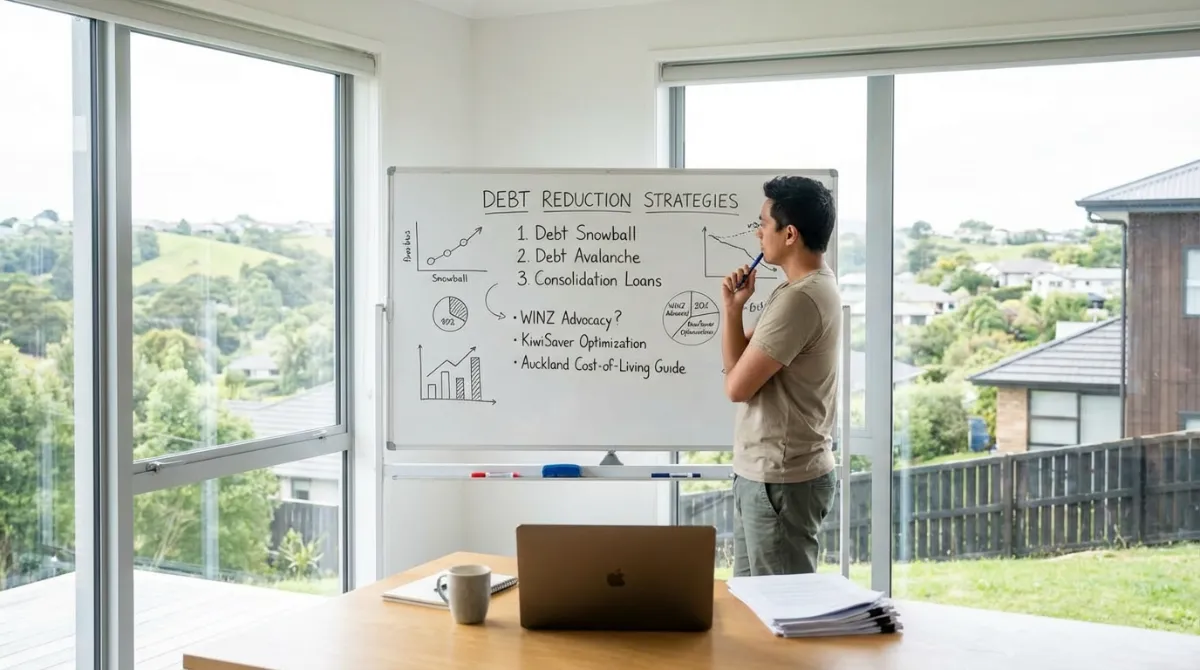
The debt snowball method NZ is a psychological approach to debt repayment that focuses on building momentum. Instead of prioritising the highest interest rates, you tackle your smallest debts first. As each small debt is paid off, the money you were paying on it ‘snowballs’ into the payment for the next smallest debt, creating a powerful psychological boost and freeing up more cash flow.
“The debt snowball method isn’t just about numbers; it’s about wins. Each debt paid off fuels your motivation to keep going.” – Financial Advisor Insight.
Step 1: List All Your Debts
Gather all your debt information: credit cards, personal loans, car loans, etc. List them from smallest balance to largest, regardless of interest rate. Include the current balance, minimum payment, and interest rate for each.
Step 2: Make Minimum Payments on All But the Smallest
Continue to make the minimum required payments on all your debts except for the one with the smallest balance. This ensures you avoid late fees and maintain good standing with creditors.
Step 3: Attack Your Smallest Debt Aggressively
Devote all extra money you can find (from side hustles, budget cuts, WINZ payments, or unexpected income) to paying down your smallest debt as quickly as possible. Every extra dollar makes a difference.
Step 4: Roll Over Payments to the Next Debt
Once your smallest debt is paid off, celebrate! Then, take the money you were paying on that debt (its minimum payment plus any extra you were applying) and add it to the minimum payment of your next smallest debt. This is where the ‘snowball’ effect kicks in, allowing you to pay off subsequent debts faster.
The Debt Avalanche Method: Prioritising High-Interest Debt
For those who are more mathematically inclined and motivated by saving the most money on interest, the debt avalanche method is often recommended. This strategy prioritises paying down debts with the highest interest rates first, regardless of the balance. Over time, this approach can save you significantly more in interest charges compared to the debt snowball method.
Step 1: List All Your Debts by Interest Rate
As with the snowball, list all your debts. This time, order them from the highest interest rate to the lowest. Note the balance, minimum payment, and interest rate for each.
Step 2: Make Minimum Payments on All But the Highest-Interest Debt
Pay the minimum on all debts except for the one with the highest interest rate. This is crucial for avoiding penalties and maintaining your credit health.
Step 3: Focus Extra Payments on the Highest-Interest Debt
Direct any additional funds you have towards the debt with the highest interest rate. This ensures you’re reducing the most expensive debt first, minimising the total interest you’ll pay over the long run.
Step 4: Repeat After Repayment
Once the highest-interest debt is fully paid off, take the money you were allocating to it and add it to the minimum payment of the next debt on your list (the one with the second-highest interest rate). Continue this process until all your debts are eliminated.
Consolidation Loans: When They Make Sense
Debt consolidation involves taking out a new loan to pay off multiple existing debts. The goal is often to simplify payments into a single, lower monthly installment, potentially with a lower overall interest rate. In New Zealand, consolidation loans can be a viable option, especially if you have multiple high-interest debts like credit cards or store cards.
When it makes sense:
- You qualify for a consolidation loan with a significantly lower interest rate than your current combined debts.
- You struggle with managing multiple due dates and want to simplify your finances.
- You have a clear plan to avoid accumulating new debt after consolidation.
When to be cautious:
- The new loan has a longer term, meaning you could pay more interest over time even with a lower rate.
- There are high fees associated with the consolidation loan.
- You haven’t addressed the underlying spending habits that led to the debt.
Always compare the total cost, including fees, of a consolidation loan against your current debts before committing.
Negotiating with Creditors for Lower Payments
Many people don’t realise that creditors might be willing to negotiate, especially if you’re experiencing genuine financial hardship. It’s always worth a conversation. Being proactive can prevent your debt from going to collections and potentially damaging your credit score.

Tips for negotiating:
- Be honest about your situation: Explain why you’re struggling to make payments.
- Be prepared: Know your income, expenses, and what you realistically can afford to pay.
- Suggest a plan: Propose a revised payment plan that works for you.
- Ask about options: Inquire about lower interest rates, waived fees, or a temporary deferral of payments.
- Get it in writing: Always ensure any agreement is documented in writing to avoid future misunderstandings.
Aggressive Repayment vs. Sustainable Plans
There’s a fine line between aggressively paying down debt and stretching yourself too thin. While an aggressive approach can get you out of debt faster and save on interest, it’s crucial that your plan is sustainable for your financial wellbeing and quality of life.
Aggressive Repayment: Involves cutting expenses to the bare minimum, maximising income, and directing almost all spare cash towards debt. Ideal if you have a stable income, significant extra funds, and can handle a period of austerity without burnout.
Sustainable Plan: Balances debt repayment with other financial goals and a reasonable quality of life. Allows for some discretionary spending, emergency savings, and perhaps even some KiwiSaver contributions. Best for those with less disposable income or who need a longer, more manageable approach to avoid fatigue.
The best approach for you will depend on your income, expenses (especially Auckland’s cost of living), emotional resilience, and financial goals. Often, a blend of both can be effective.

Creating a Personalised Debt Repayment Plan
The most effective debt repayment strategies are those tailored to your unique circumstances. Building a personalised plan involves understanding your current financial situation, setting realistic goals, and choosing methods that resonate with you.
Action Checklist for Your Personalised Debt Plan:
- Understand Your ‘Why’: What motivates you to become debt-free? (e.g., buying a home, financial freedom, less stress).
- Detailed Budget Review: Create a meticulous budget to identify where your money is going and where you can cut back. Consider Auckland-specific costs.
- Emergency Fund First: Before tackling debt aggressively, aim for a small emergency fund (e.g., $1000) to prevent new debt from unexpected expenses.
- Choose Your Method: Decide whether the debt snowball method NZ or the debt avalanche method aligns better with your personality and financial goals.
- Automate Payments: Set up automatic minimum payments for all debts to avoid late fees.
- Boost Income: Explore ways to increase your income, even temporarily (e.g., side hustle, selling unused items).
- Track Progress Regularly: Keep a visual tracker (spreadsheet, app) to see your debts shrinking. This keeps motivation high.
- Seek Professional Advice: If overwhelmed, don’t hesitate to reach out to financial mentors like Mangere Budgeting.
Mangere Budgeting’s Debt Advice & Support
Navigating debt can be complex, but you don’t have to do it alone. Mangere Budgeting is dedicated to empowering New Zealanders, particularly those in Auckland, with practical, culturally sensitive financial guidance. From optimising WINZ benefits to understanding KiwiSaver and crafting a budget that works for Auckland’s cost of living, we’re your local experts.
Our experienced financial mentors can help you:
- Assess your current debt situation and create a realistic plan.
- Understand the pros and cons of different debt repayment strategies for your specific circumstances.
- Negotiate with creditors on your behalf or guide you through the process.
- Connect you with other community resources and support.
Frequently Asked Questions (FAQ)
- Q: Which is better, debt snowball or debt avalanche?
A: The debt avalanche method typically saves you more money on interest in the long run because it prioritises high-interest debts. The debt snowball method, however, provides quicker psychological wins by eliminating small debts first, which can be highly motivating for many individuals. The ‘best’ method depends on your personal financial psychology and how you stay motivated. - Q: Can Mangere Budgeting help me if I’m receiving WINZ benefits?
A: Absolutely. Mangere Budgeting has extensive experience helping individuals and families who are receiving WINZ benefits. We can assist with understanding your entitlements, budgeting around benefit payments, and advocating for you when needed, ensuring your debt repayment plan is realistic within your income. - Q: Is debt consolidation a good idea for everyone in NZ?
A: Debt consolidation can be a good idea for some, but not all. It’s beneficial if it significantly lowers your interest rate and monthly payments, and you use it as an opportunity to change your spending habits. However, if the new loan has hidden fees, a longer term, or you continue to accrue new debt, it can worsen your financial situation. It’s crucial to assess the terms carefully and consider professional advice. - Q: How do I start creating a budget that accounts for Auckland’s cost of living?
A: Start by tracking all your income and expenses for at least a month. Be realistic about high Auckland costs like rent, transport, and groceries. Prioritise essential needs, identify areas where you can cut back, and allocate funds for debt repayment. Tools like budgeting apps or a simple spreadsheet can help. Mangere Budgeting can also provide tailored guidance for living affordably in Auckland.
References/Sources
- Sorted.org.nz – New Zealand’s personal finance website.
- Ministry of Social Development (MSD) – Information on WINZ benefits and support.
- Financial Mentors New Zealand – Guidelines and best practices for financial mentoring.
- Consumer Protection NZ – Advice on debt and credit laws in New Zealand.
- Reserve Bank of New Zealand – Financial stability reports and economic data.